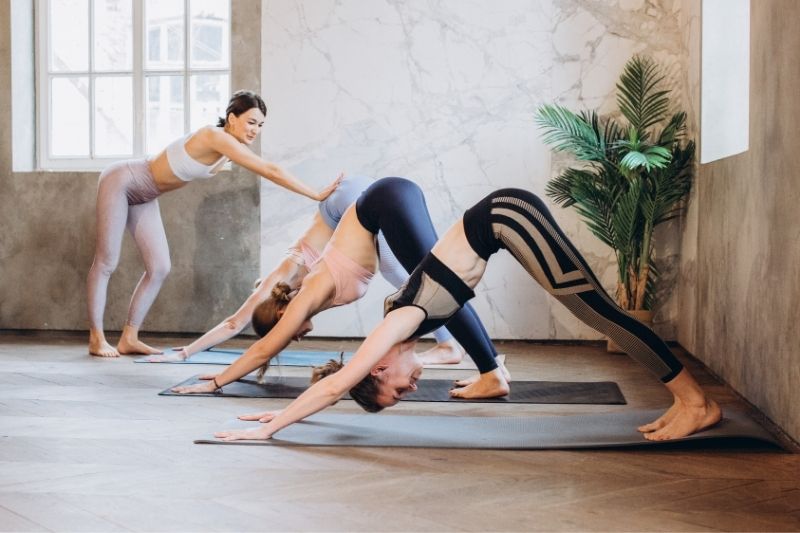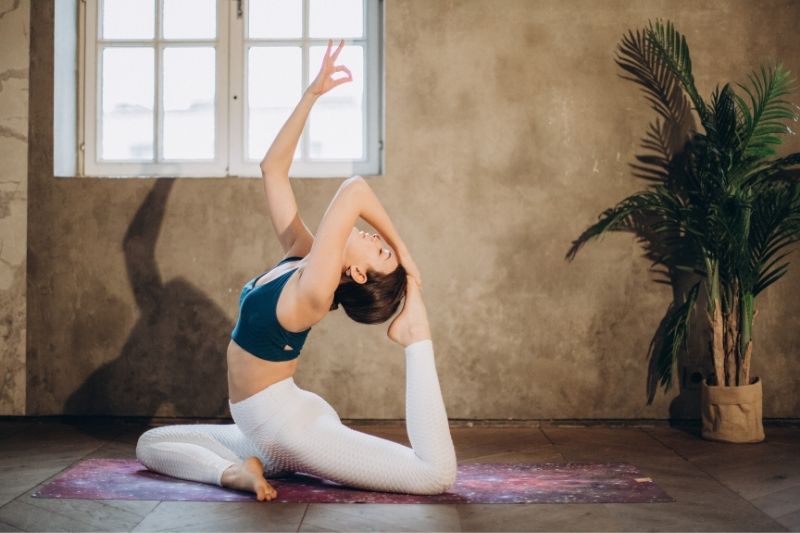
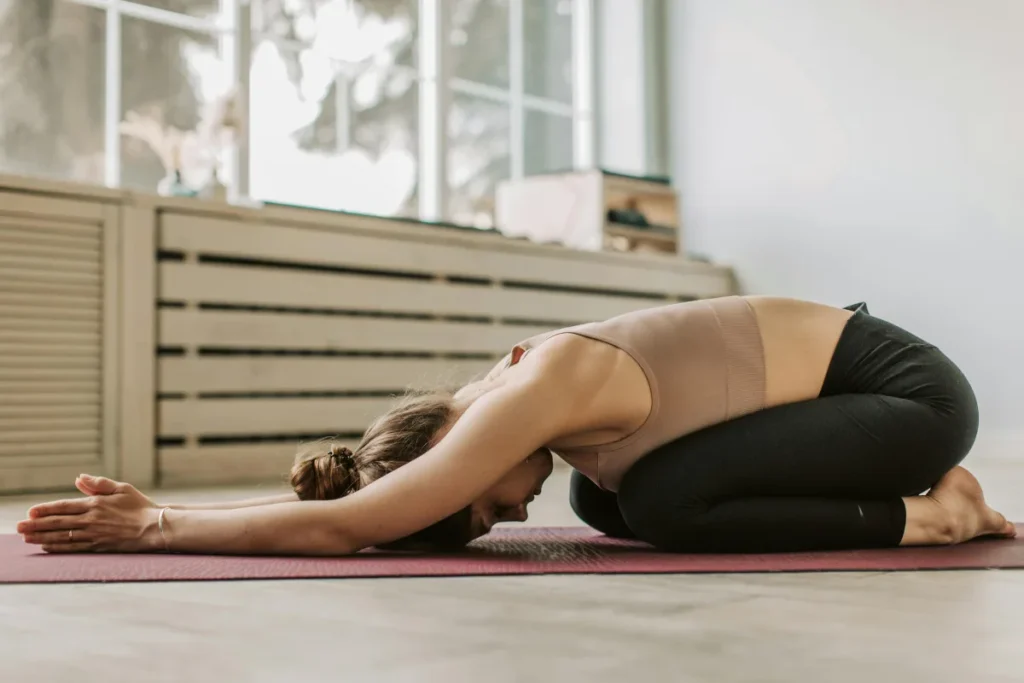
The majority of the practices you see these days are yang, flowing, muscular, heating, and gave rewards to strength and stamina. Yin Yoga is its calm counterpart. The holds last three to five minutes (or more) and with the muscles relaxed, stress is taken to the fascia, ligaments, joints and meridians. The end result isn’t just another exercise. It is a systematic approach for repairing tissues that are not reached by virtually any physical activity, not to mention rigorous yoga, and also training the nervous system to remain conscious in the face of slight, prolonged sensation.
Yin is the practice that is so physical and yet so still, is the practice that allows so many practitioners to truly reexperience how they feel on and off the mat.
What Makes Yin Different?
Yin and yang is the term for complementary qualities. Muscles are relatively yang: elastic; well supplied with blood; quick response. Connective tissue: more yin: dense, not vascular, slow. Active, short stretches affect primarily muscle. The longer and softer the holds are in position, the more gentle stress is placed on the deeper layers by the muscles being passive. This can enhance the space between the joints, reduce stiffness and promote healthy fascia glide over the course of weeks and months.
The practice also is inspired by the meridian theory of Traditional Chinese Medicine and the concept of nadis in Hatha yoga. Sequences are frequently designed to amplify certain energy lines (kidney, liver, gall bladder and so forth). The energetic model isn’t necessarily required for gaining the benefits, as the mechanical and nervous-system effects are measurable separately.
Intriguingly, the typical Yin poses are familiar, yet they are practiced differently: Less muscle effort, more props, if necessary, and invitation to stay, don’t perform.
Physical Benefits Backed by Research and Practice
The five-week Yin intervention led to a decrease in plasma adrenomedullin levels (a biomarker associated with cardiovascular stress and non-communicable disease risk), and increases in sleep scores and anxiety assessment scores, in stressed adults.
There is also an indication of flexibility and functional mobility with longer holds. In healthy women, a small randomized trial demonstrated that twice weekly yin for 6 weeks increased their flexibility in their sitting reach, balance and functional mobility and decreased anxiety and depression scores. However, in that study there was no change in respiratory measurements, and as with Yin, it is relatively quiet and non-cardio.
Many people notice a difference because this practice focuses on the joints and fascia (not on individual muscles):
- More comfortable hips, spine and shoulder movement after weeks of consistent practice
- Daily improved stiffness (particularly after sitting/when travelling)
- Improved recovery from strength training or yang yoga with the use of Yin
- A sense of calm that makes other physical activities seem easier
Yin is not a substitute for strength or aerobic activity. It’s the one slower layer that not many active folks have.
Mental and Nervous-System Effects
The slowness of opening tissue teaches attention. You can’t hold your attention for five minutes in the same way that you can flow your attention for a flow vinyasa. Uncomfortable feeling comes up, thoughts come up, and the teaching is to not jump into changing the pose or story but just be with sensation and breath.
Randomised controlled trials have reported decreases in self-reported stress, worry and state anxiety for both Yin and Yin-plus-mindfulness programs, and some studies reported continued effects at follow-up. State anxiety was reduced over the course of the 10-week online Yin program, as well as after each individual session, during a period of high anxiety (COVID). Trait anxiety had mixed or less change as expected, as temperament changes slowly.
Physiologically, a longer passive hold, combined with the application of slower respiratory rates will lead to a greater parasympathetic tone. The heart rate and breathing even out. The rest and digest branch of the autonomic nervous system receives more attention in the modern-day schedule than it deserves. This can lead to better sleep onset and quality for individuals over time who have a “busy mind” at night.
Yin is also an interoceptive training. You understand between this is hard but okay and this is bad. That skill is carried over: a lot of students say that they are less stimulated by everyday stuff after practicing staying with sensation on the mat.
Who Benefits Most—and Who Should Modify
Yin can be particularly used for:
- Individuals who sit for extended periods of time and experience stiffness in their hips and spine
- Patients who have been active in sports and yang-yoga practices with a need for recovery and preservation of health for the joints
- Person whose nervous systems are running high (anxious, poor sleep, rumination)
- Learners who wish to work at a slower pace but want to participate in a high-speed class
Easy is not a given. Intensity is not about strength, it is about how long. If a person is hypermobile, he would be advised not to hang into end-range without the help of the muscles. Some injuries, a recent operation, some types of joints and pregnancy may require an individual assessment and possibly additional props or omitted poses. The difference between useful stress and strain is less with a knowledgeable teacher in the style of Yin since they are loaded for longer periods of time.
How to Learn the Practice Correctly
Try some of the courses available online, but much of the finesse (how much sensation is too much, how to introduce props to ensure that a pose remains passive, how to sequence for meridians and how to sequence for specific joints) is easier received in person. Rishikesh is one of the densest areas for residential yoga education in the world. They have immersive programs that include daily practice, functional anatomy (with particular focus on fascia and joints), meridian theory, and teaching methodology which work in harmony and within a setting that already has a slower rhythm.
If you’re interested in teaching, or wish to explore beyond drop-in classes, search for those that view yin as a whole artform instead of a quick add-on class. A devoted yin yoga teacher training in rishikesh will teach you the form and the meditative container, which makes it more than a long stretch, safe modifications, the anatomy behind the form and sequencing logic. If faculty has actual experience in yin yoga, there are broader yoga teacher training in rishikesh programs that could work, which may include a significant units of yin yoga.
Look for schools where they are clear about Yoga Alliance (or equivalent) hours, daily schedules, teacher qualifications and handling of individual bodies. Ganga and the foothills are supportive, how good your instruction is determines whether you come out with a sustainable practice or a certificate!
Making It a Game-Changer in Daily Life
Two or three Yin sessions a week (30–75 minutes) is enough for most people to notice change within a month. Pair it with whatever yang work you already do rather than replacing it. Use the last 10–15 minutes of a session, or a short evening practice, when you want the nervous system to downshift before sleep.
The game-changing part is not dramatic flexibility. It is the accumulated effect of regularly giving connective tissue time, giving the mind a place to practice non-reactivity, and giving the autonomic nervous system more parasympathetic hours. In a culture that rewards constant output, a practice that rewards staying is quietly radical.
Start where you are. Stay longer than feels comfortable—but never longer than feels safe. The tissues and the mind both adapt when the stress is intelligent and the rest is real.