
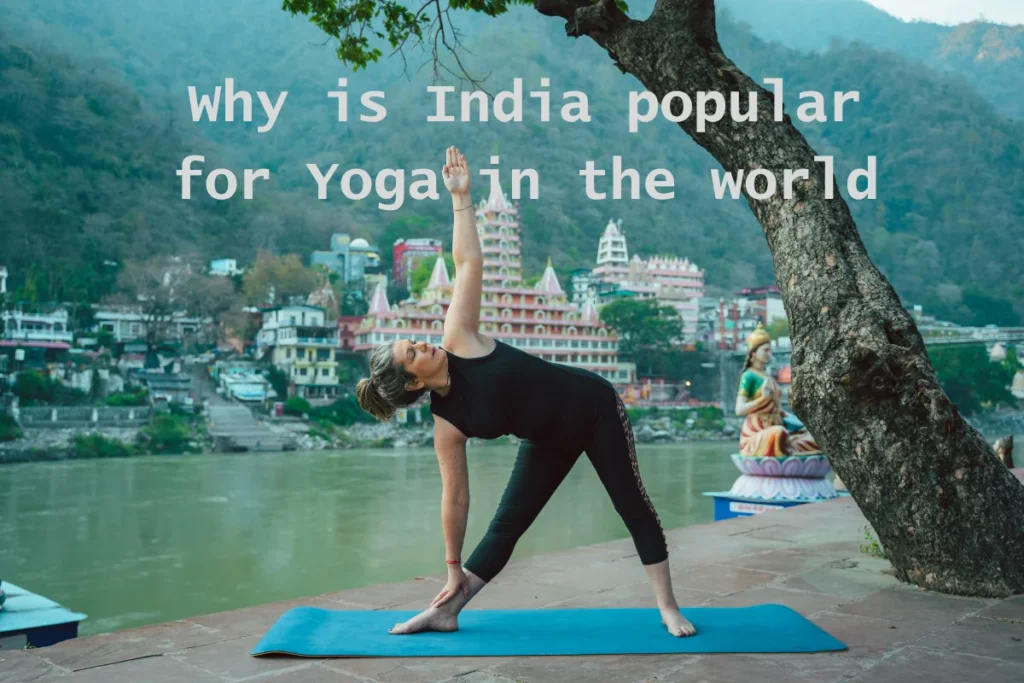
India is home to authentic ashrams and qualified teacher training institutes, and has the oldest form of yoga in the world, which was born here; hence, it leads the global yoga movement. People visiting India select it for its affordable price, in-depth experience as a training ground, outstanding gurus, and the cultural essence that is unsurpassed in any other country. The mix of tradition, value, and truth continues to make India the heart of the global yoga industry.
Yoga is not a fitness craze. It originated in India. Prior to studios and spandex, the Buddha and his Indian followers created yoga as a holistic approach, physical, mental, and spiritual. This is what makes India credible.
Modern practitioners sense this difference firsthand. A yoga class at a Western gym teaches postures. In India, a yogi teaches a philosophy and not yoga. The difference is significant and is why millions of people still travel to India each year to immerse themselves in their practice at its birthplace.
Why Does India Remain the Birthplace of Authentic Yoga?
The origins of yoga go back to the Indus Valley Civilization, and the earliest mention of it is in the Rigveda, while it was documented systematically in the Yoga Sutras by Patanjali. It’s not marketing jargon; it’s historical fact. Known as the “Yoga Capital of the World,” the city of Rishikesh is located on the banks of the Ganges River and has been a place of pilgrimage for seekers for centuries, including the famous Beatles, who visited in 1968.
That lineage fosters trust. Students are aware that they are learning techniques that have been handed down through the unbroken teaching tradition, and not packaged fitness programs. Authenticity sells itself.
What Makes Indian Ashrams and Teacher Training Different?
The original immersive yoga education model was created by ashrams. Asana and meditation, chanting, philosophy learning, and 60 minutes of total teaching and learning are not interspersed between errands every day. Students stay on campus, dine with much simplicity and take away distractions. The outcome: accelerated, deeper learning.
Yoga ashram in India offer students a more direct experience of the traditional gurukul- or teacher-centered approach to yoga, which occurred in groups of only a few individuals, or even in a 1-on-1 setting. Choose this path if immersion and spiritual profundity are more important to you than convenience and schedule flexibility.
Certification will provide an added attraction. The 200 hour yoga teacher training in India has similar standards as prescribed by Yoga Alliance, but the cost is lower than that in the US, UK or Australia. Within three or four weeks, students complete an internationally recognized credential, learn anatomy skills, and receive direct mentoring from successful teachers.
How Much Does Yoga Training in India Cost Compared to the West?
India wins hands down at cost. In the United States, a 200-hour certification program should cost between $3,000 and $5,000, and may be offered with or without lodging. At times, the same certification in India — consisting of lodging, food, and courses — can be as costly as $800 to $1,500. If budget is an issue, go with the Indian program; if travel is not, choose a local program.
But this price difference does not reflect a cheaper option. There are several Yoga Alliance-accredited training centers in India, where teachers are endowed with decades of lineage experience, and the teaching is still the same as in the West.
What Role Does Spirituality Play in India’s Yoga Appeal?
In India, yoga is not a separate entity of spiritual life; rather, it is intertwined with it. The atmosphere of practice is not performative, but rather purposeful in the presence of temples, rivers, and ashrams. When the training is conducted in facilities designed for that purpose, students experience quicker progress in the practice of meditation and self-awareness.
Each area has different traditions, such as Rishikesh, Mysore and Dharamshala. Mysore is known for its Ashtanga yoga practice, which is taught by K. Pattabhi Jois. Rishikesh is focused on the Hatha and Kundalini practices. Dharamshala combines yoga with Tibetan Buddhist Philosophy. Select a site based on the genes that are being analyzed and not only on convenience.
How Does India’s Yoga Tourism Industry Support Global Demand?
The Indian government has been actively encouraging the promotion of Yoga tourism, and the adoption of June 21 as the International Day of Yoga by the United Nations in 2014 was a major initiative of Indian Prime Minister Narendra Modi. That international acknowledgement only strengthened the perception of many who knew that India is the natural home of Yoga.
Infrastructure has been responding to demand. Today there are ashrams, training schools, wellness retreats and Ayurvedic centers open all over the country dedicated to catering to the needs of international students. It’s not a small-time business any longer. A formal sector that is regulated by the government and has a high tourism value each year.
Who Should Train for Yoga in India?
Spend time in India to get a truly authentic education at an affordable cost, based on the original philosophy of yoga. If it isn’t feasible to study at the source due to travel or time restrictions, train locally. India offers an experience that is not found anywhere else except in a studio for aspiring teachers, students developing a personal practice, or for those looking for a breath of fresh air outside of the physical postures.
Start Your Yoga Journey at the Source
India did not embrace yoga. India created it. This is the sole reason why most serious practitioners, teachers and curious beginners do keep coming back to its ashrams, training schools, and sacred cities.
In order to further your practice, if you’re in need of studying accredited programs, comparing lineage and teaching style and booking early – peak seasons in Rishikesh and Mysore fill up fast. The next thing you need to do is locate certified training center and verify Yoga Alliance accreditation, and get ready to embark on the journey!
Frequently Asked Questions
1. Why is India considered the birthplace of yoga?
The practice of yoga has been practised in India for thousands of years, and there are records of its practice in the ancient texts, such as the Rigveda and Patanjali’s Yoga Sutras. It is a continuous lineage that brings unparalleled authenticity to Yoga education in India.
2. How much does yoga teacher training cost in India?
The certification in India takes 200 hours, and the total amount of money spent is $800-$1500 per person, which is cheaper than similar programs offered in Western countries, which cost $3000-$5000 per person.
3. What is the best time of year to train for yoga in India?
The peak seasons are September through April, when you can get drier and less humid weather in places like Rishikesh, Mysore, and other cities for longer outdoor practice.
4. Do I need prior yoga experience to join a 200-hour training?
No. Most 200-hour programs cover either beginners or experienced practitioners – they can be used for both.
5. What’s the difference between an ashram stay and a teacher training course?
A yoga ashram stay focuses on immersive spiritual and personal practice without yoga teacher training certification. A yoga ttc course follows a structured curriculum leading to an internationally recognized teaching credential.